Biology operates across a stunning variety of environments — including beyond the confines of Earth. As part of my research on organism-environment relationships, I’ve designed, built, and integrated multiple projects that went beyond the Kármán line. The constraints drive the types of biology that can fly, the experimental design, and the scientific questions that can be asked.

At the MIT Media Lab and Space Exploration Initiative, I led the group's space biology research thread, which grew from a set of early experiments into a sustained program spanning parabolic flights, suborbital launches, and the ISS. I co-designed flight hardware, created protocols for hardware selection, in-flight measurement, and post-flight assays, and navigated the safety review processes required for biological payloads. As a Research Affiliate with the Space Exploration Initiative (2021-2025), I continued advising on astrobiology research direction and co-coordinating Initiative events and conferences focused on life in space. As payload lead, I flew one ISS and one zero gravity parabolic experiment featuring living systems.
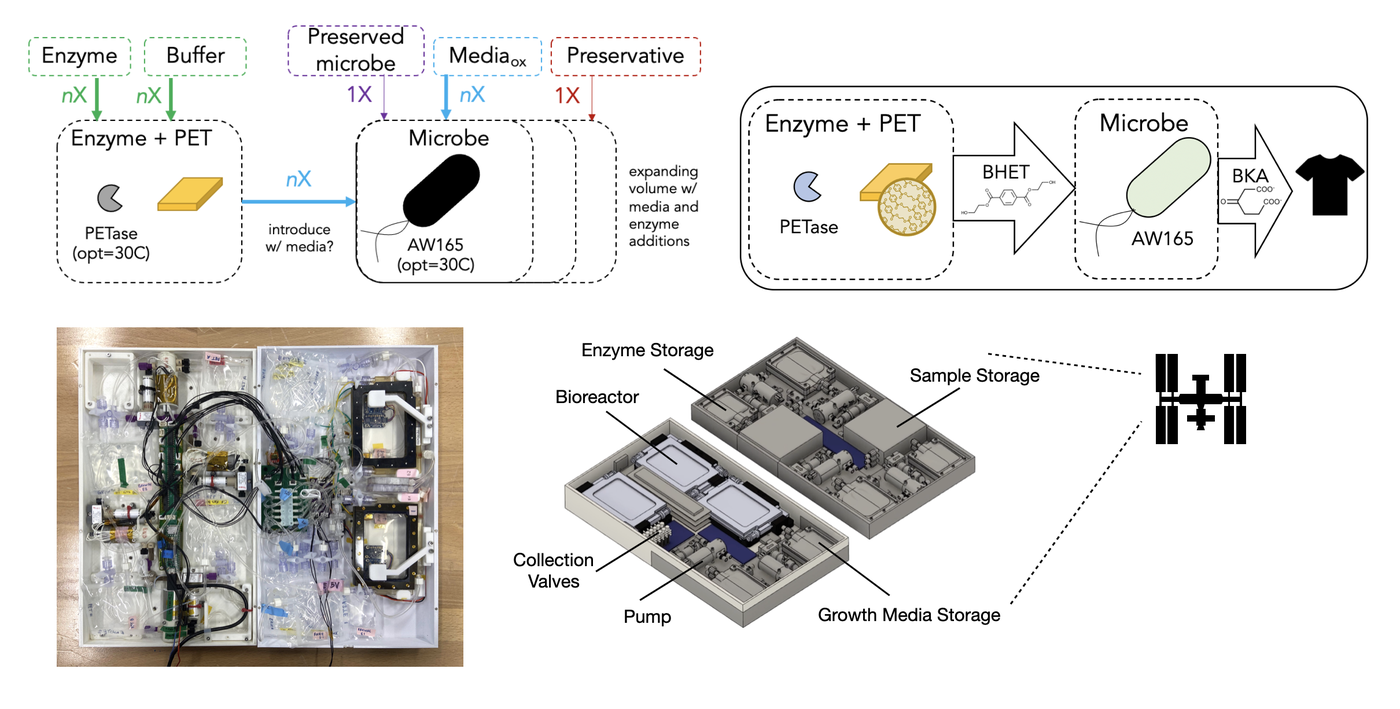
I served as supporting biologist and integrator for a 30-day ISS experiment called MicroPET, investigating microbial and enzymatic degradation of plastics in microgravity, as part of in situ resource utilization research. My role focused on experimental design, validation, and mission integration for the biological payload. The project was recognized as a TIME Best Invention (2023) and Fast Company World Changing Ideas Experimental Finalist (2023). The hardware and protocol are published in npj Microgravity.
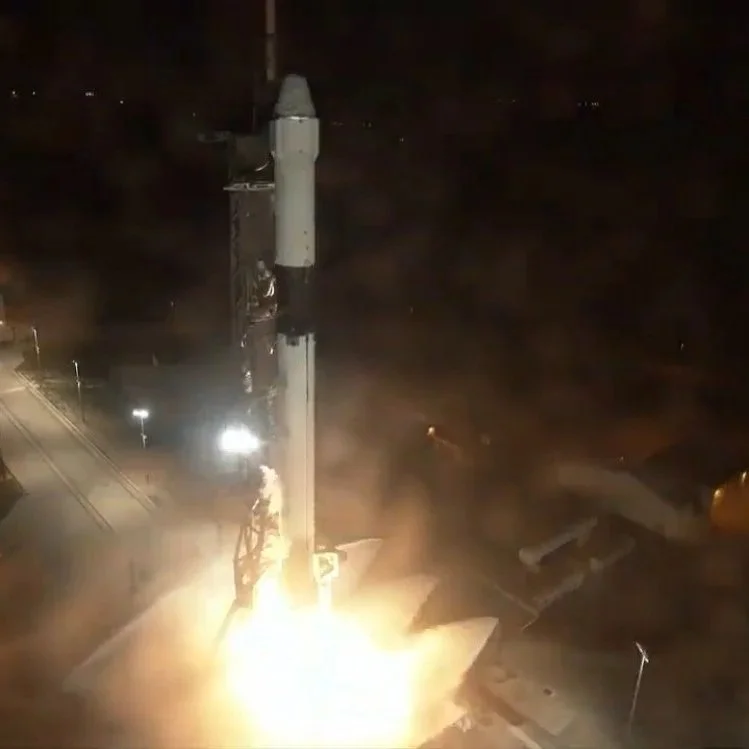
As Co-Investigator and Payload Lead of the Radiofungi project, I led the biological experimental design, validation, and mission integration for a 30-day experiment aboard the International Space Station, launched on SpaceX Dragon CRS-20. The project investigated how different microorganisms alter their pigment production in response to environmental stresses in low Earth orbit. I designed the flight hardware protocols, in-flight measurement procedures, and post-flight assays. This work was supported by the Translational Research Institute for Space Health (TRISH) through NASA and the MIT Space Exploration Initiative.

From 2019 to 2022, I organized and moderated the annual "Life in Space" panel at Beyond the Cradle, the MIT Space Exploration Initiative's conference bringing together leaders across space research, industry, and the arts. I contributed two chapters ("Radiofungi" and "ZG Stardust") to Into the Anthropocosmos (MIT Press, 2022), edited by Ariel Ekblaw. Several space biology projects have been exhibited internationally, including at Ars Electronica (2020) and Le Pavillon Namur, Belgium (2024-2025).
