My earliest scientific training was in neuroscience, where I learned to build instruments, design experiments, and work with living systems under tight constraints. This work gave me foundational skills in optical and electrophysiological recording, animal surgery, behavioral assay design, and computational image analysis that have informed everything I've done since.
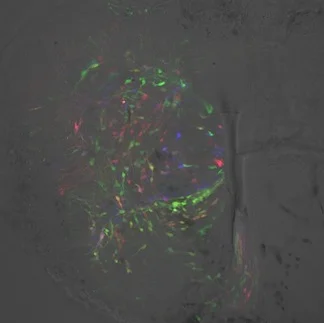
I spent three years in Ed Boyden's lab at the McGovern Institute for Brain Research, starting as a sophomore. I designed a collaborative optogenetics project involving manipulation of the basolateral amygdala and hippocampus, and built a VR-based behavioral assay for automated electrophysiology and recording in awake mice using Unity and MATLAB. I performed small rodent craniotomy, virus injection, perfusion, fiber implant creation, and trained fellow lab members in these techniques. I conducted computational analysis of electrophysiological data from awake behaving animals and used confocal microscopy to analyze tissue sections and neural connections. I presented this work at international conferences including the Society for Neuroscience. This research contributed to my undergraduate thesis, "Behavioral and Electrophysiological Study of Virtual Navigation in Mice," advised by Dr. Annabelle Singer and Prof. Ed Boyden.


At INSERM U592 under Dr. Jean Livet, I improved Brainbow techniques for identifying clonal bodies and cell lineage in quail, chick, and mouse. I designed synthetic circuits, executed cloning protocols, conducted injections, microdissections, and confocal microscopy for tissue analysis. I developed an algorithm in MATLAB for detecting sister cells in confocal image stacks and for visual representation of aggregate data in volumetric images.
At INSERM U934 under Prof. Edith Heard, I worked on breast cancer research in mammalian cells, focusing on the process of X-chromosome inactivation as it relates to tumor development. I examined the roles of non-coding regulatory RNAs Xist and Tsix, and conducted immunohistochemistry, histology, and microscopy for tissue tagging and analysis.
My first research experience, at age 15, was at the Simons Center for the Social Brain under Prof. Mriganka Sur, investigating the effect of environmental enrichment on a Pten haploinsufficient mouse model of Autism Spectrum Disorders. This work contributed to my selection as an Intel Science Talent Search finalist (2010). Prior to this, at age 14, I began research under Prof. Pawan Sinha in the Department of Brain and Cognitive Sciences, creating an image processing and evaluation workflow in MATLAB for an experiment exploring differences in how individuals with and without ASD integrate and perceive images.