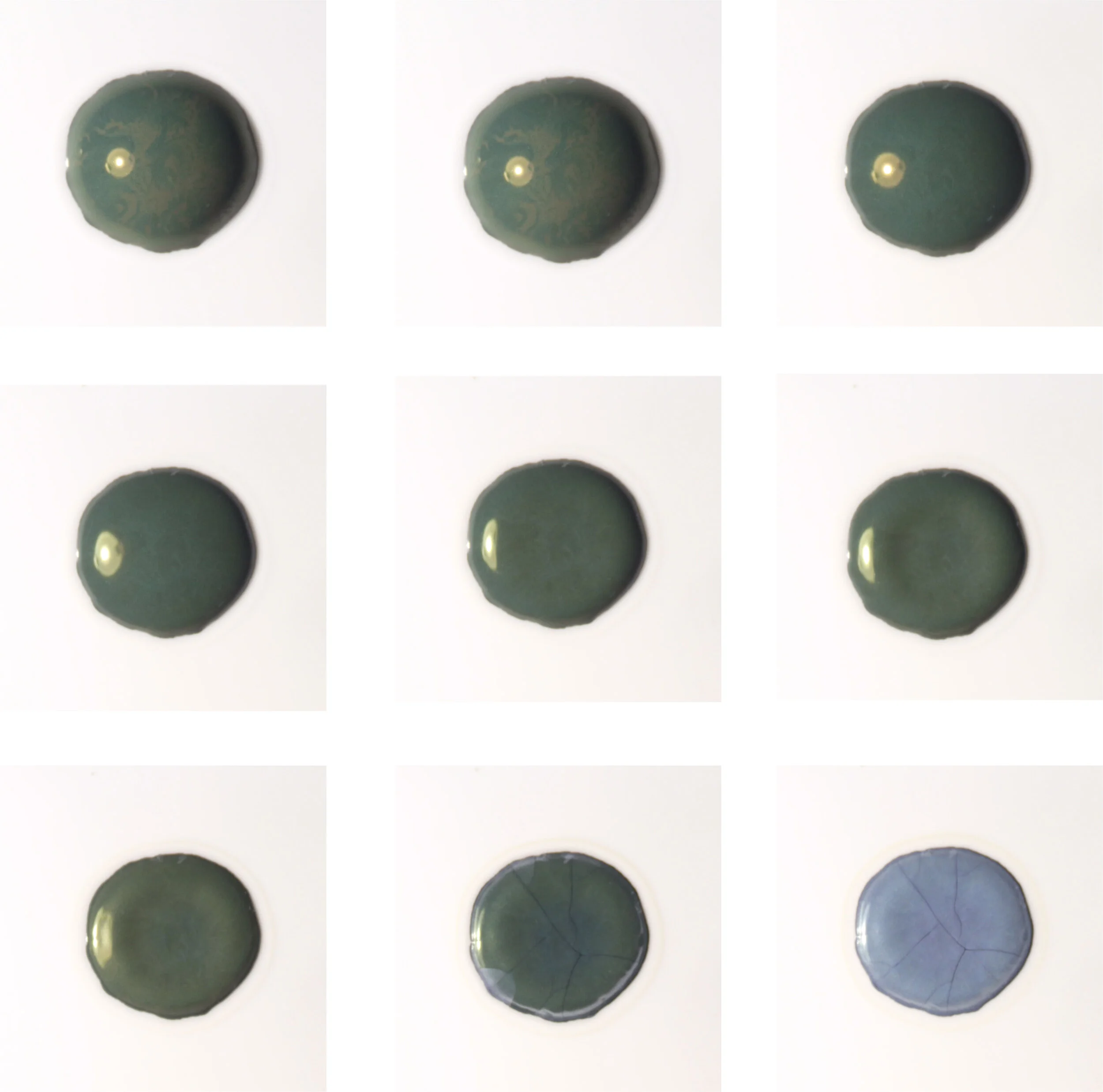
What happens when you intentionally design for the living systems that are around and within us? My work in biodesign focuses on designing with organisms across scales and environments. This research spans biohybrid materials, biological 3D printing, structural color, and organism-driven fabrication, developed primarily at the MIT Media Lab and through independent work.
I was joint first author on a project developing digitally designed, 3D-printed multimaterial structures with programmable biohybrid surfaces. We used inkjet-based Polyjet printing to create spatially controlled material gradients that could host and sustain engineered microorganisms. The organisms responded to their local material environment, producing pigments and fluorescent proteins in patterns determined by the printed substrate. Published in Advanced Functional Materials (2020).
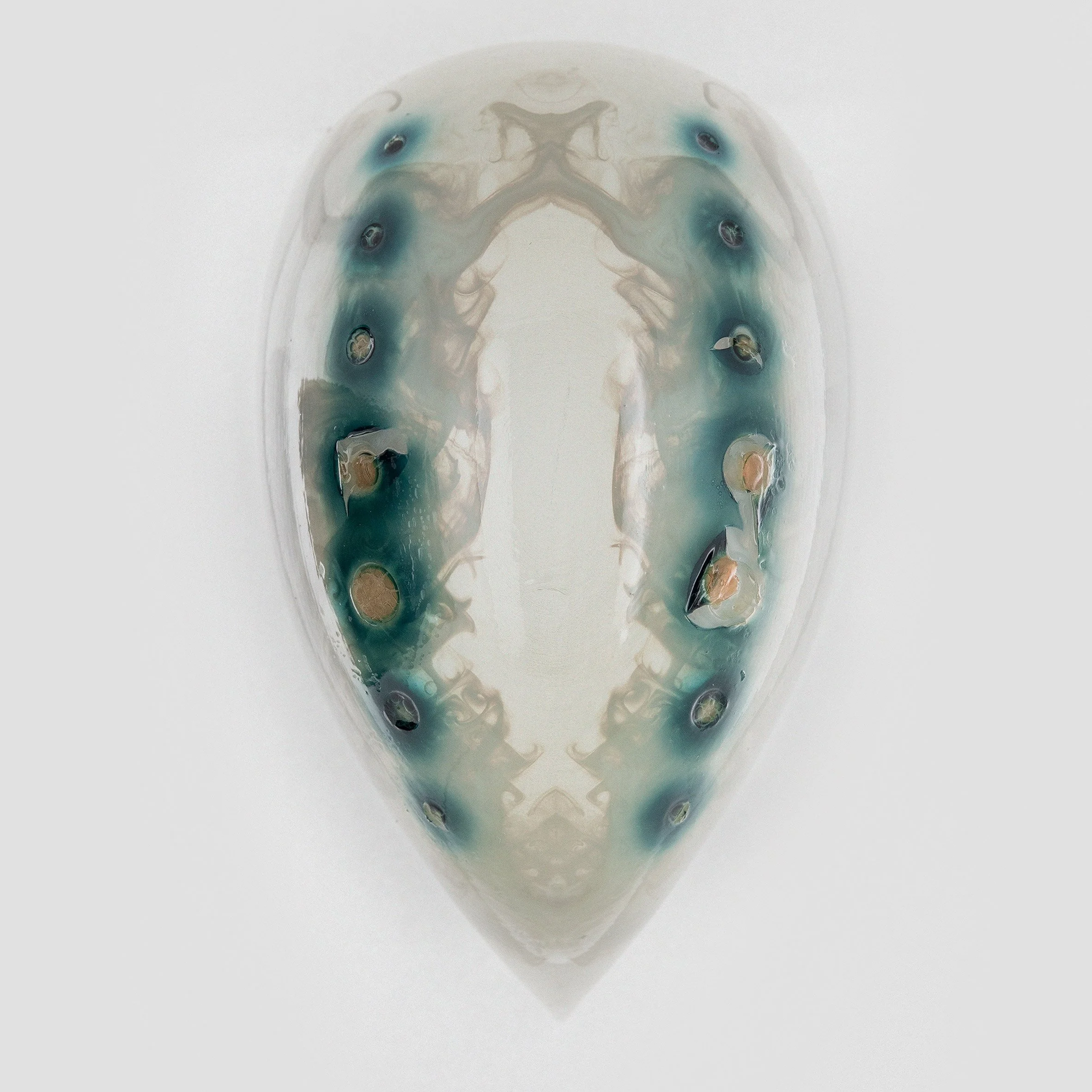
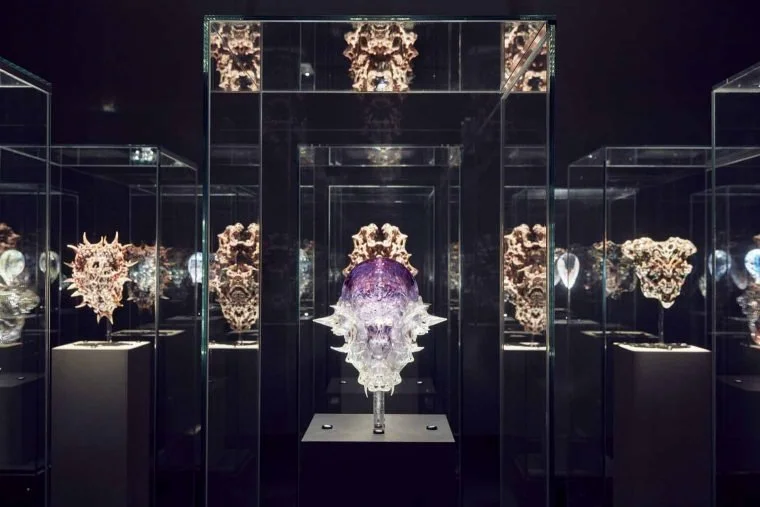
I contributed to the biology and fabrication of Vespers, a series of computationally designed and 3D-printed death masks incorporating living pigment-producing microorganisms. The masks explored how biological processes could be embedded in designed objects. This project was exhibited at the Barbican (London), National Gallery of Victoria (Melbourne), Design Museum (London), Philadelphia Museum of Art, and Beijing Media Art Biennale, among others.
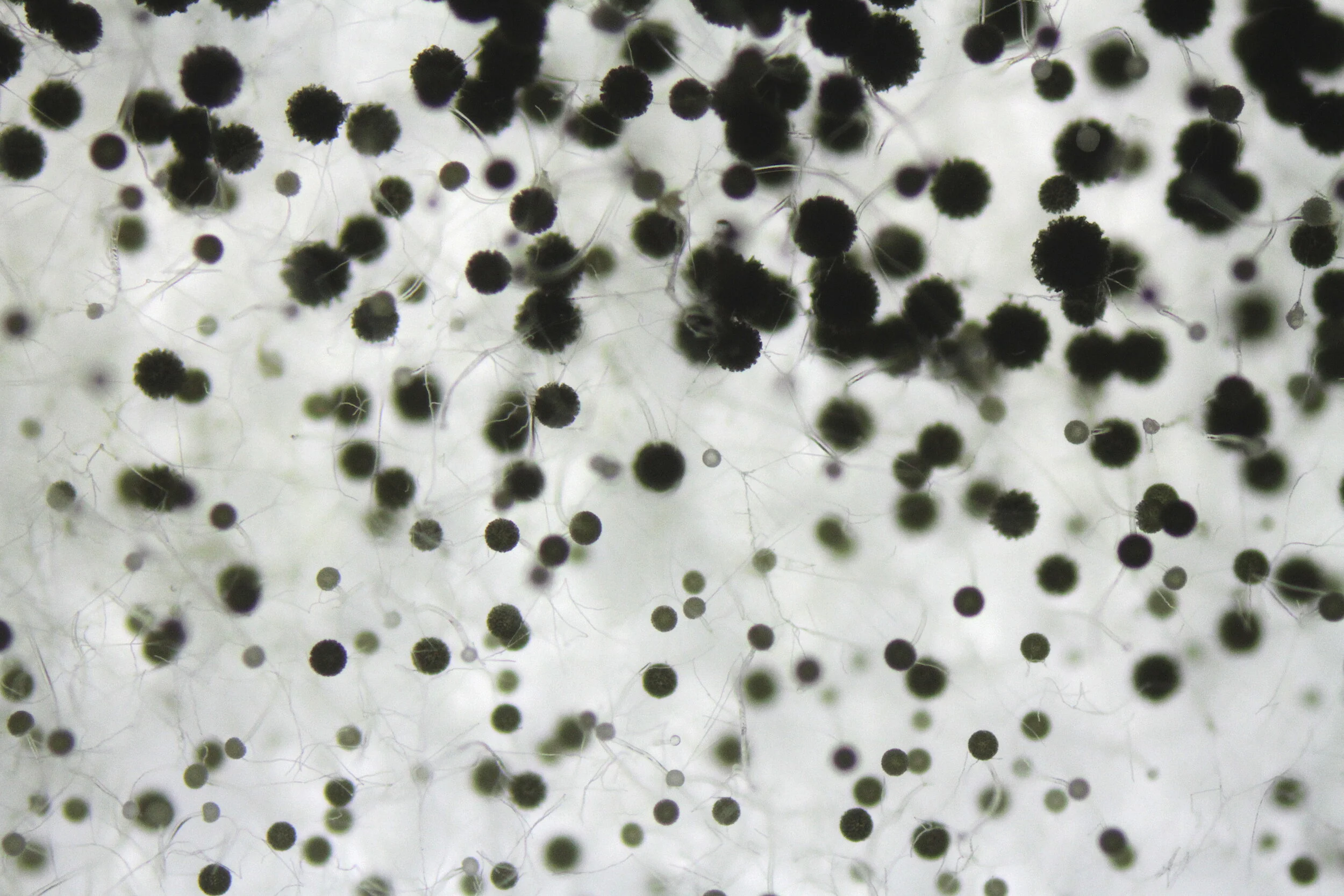
As artist-in-residence in the Applied and Molecular Microbiology lab of Dr. Vera Meyer at TU Berlin, I conducted cross-disciplinary research connecting color theory with pigment science and biodiversity, focusing on the fungus Aspergillus niger. The project produced a scientific publication in Fungal Biology and Biotechnology and video works exhibited at tinyBE (2021). A chapter, "The Colors of Life / Farben des Lebens," was published in Engage with Fungi (TU Berlin, 2022).

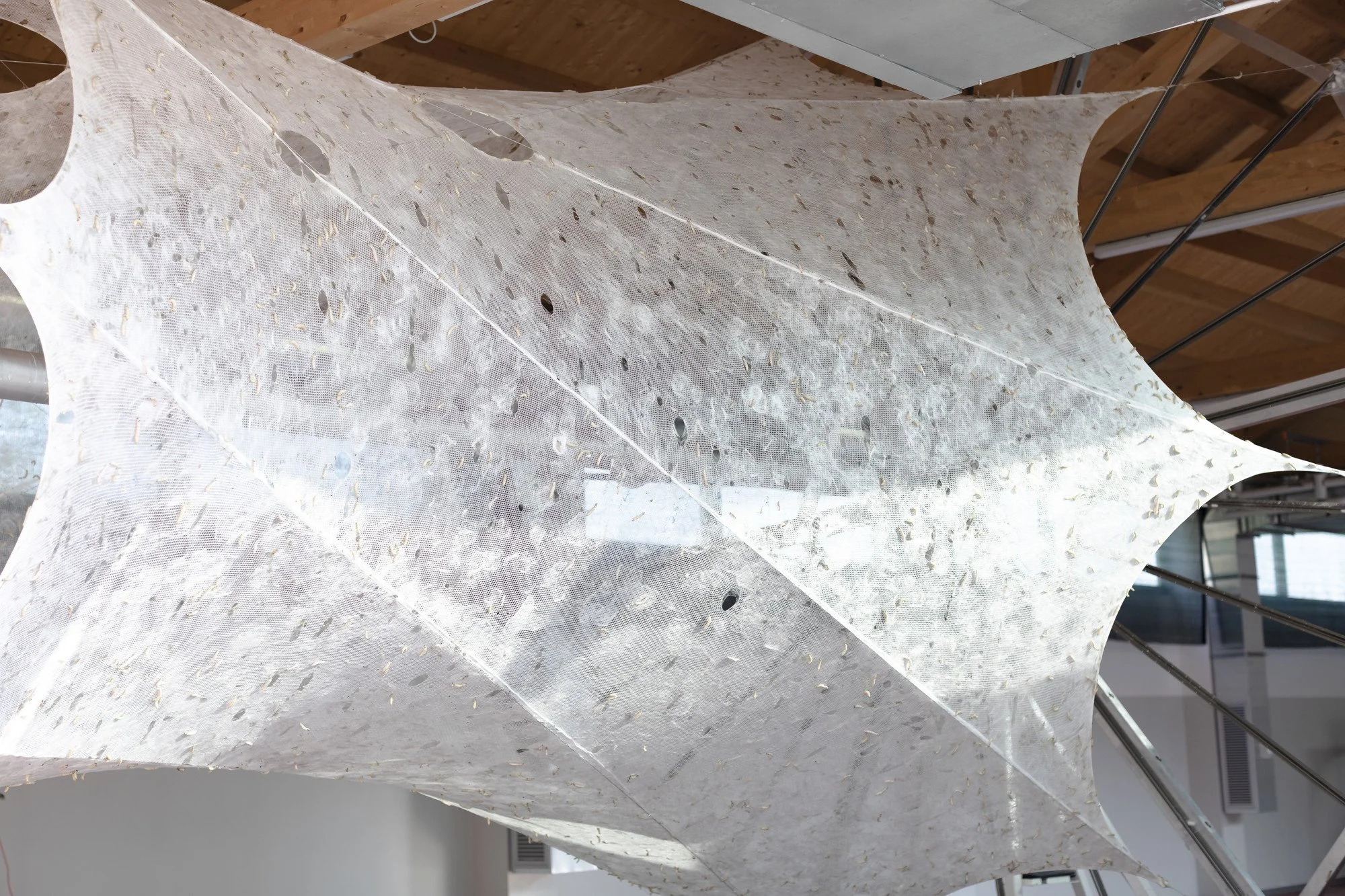
I led the biological research for the Silk II project, which used silkworms (Bombyx mori) as biological fabrication agents, guided by computationally designed scaffolds to spin large-scale silk structures. I managed the sericulture, behavioral observation, and biological experimental design. This work explored how living organisms could build architectural-scale material systems without harming their lives through conventional manufacturing. Silk II was exhibited at the Museum of Modern Art, New York ("Neri Oxman: Material Ecology," 2020) and the San Francisco Museum of Modern Art ("NATURE X HUMANITY," 2022).
I contributed to the Aguahoja series, a research project and pavilion series exploring robotically fabricated structures made entirely of organic materials (chitosan, cellulose, pectin) that are shaped by water and designed to decompose. My role was to advise on design with the dynamic materials and image to better understand the micro and macroscale behaviors. The work examined how natural material properties could drive fabrication logic. Exhibited at Cooper Hewitt Smithsonian Design Museum, Centre Pompidou, and Cube Design Museum. The pavilion was installed at the MIT Media Lab.
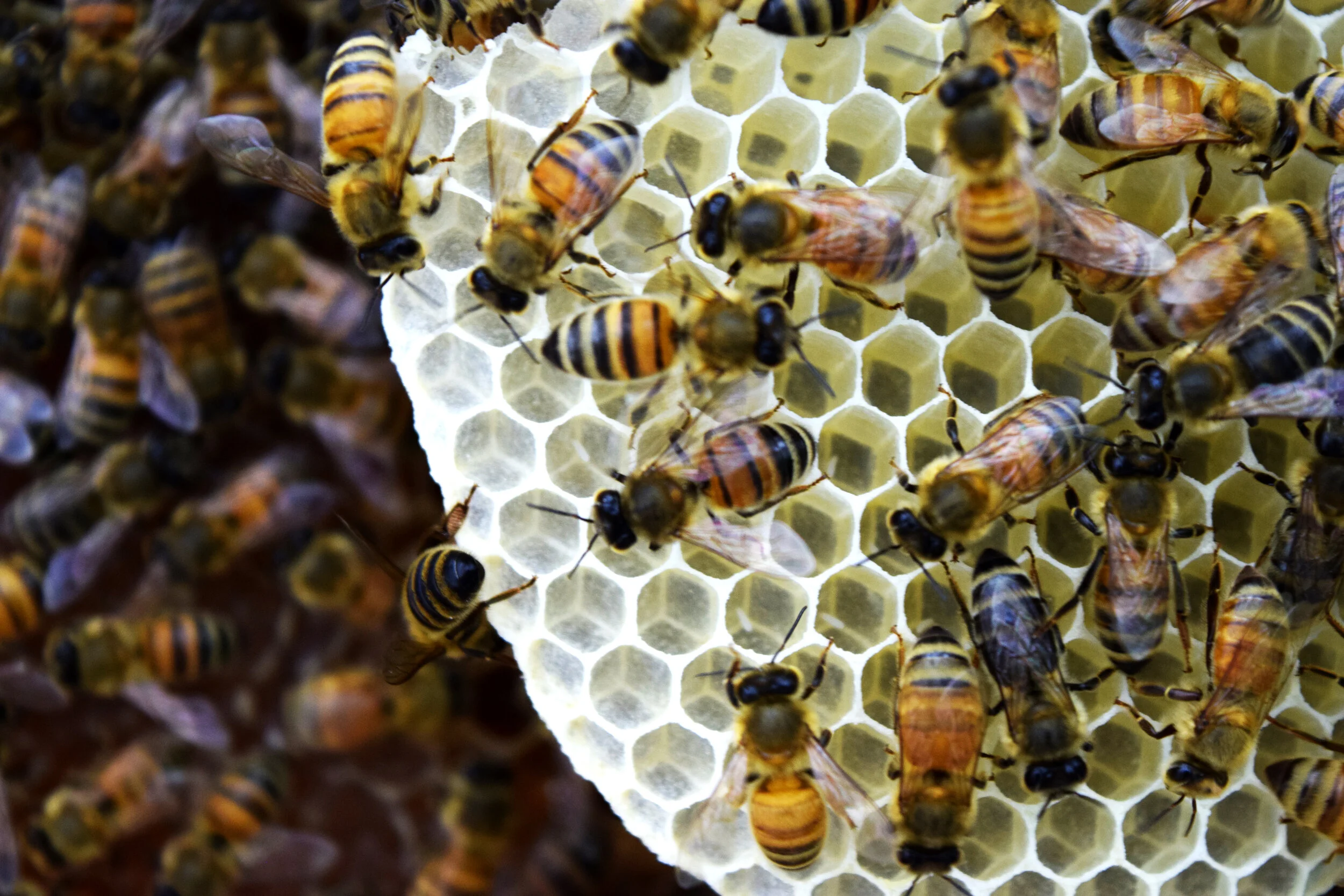
I led the biological investigation and related design for Synthetic Apiary, a controlled environment for maintaining honeybee colonies year-round. Our aim was to study honeybees, an important species for ecosystem health and for human survival, in a controlled manner by creating a new kind of “lab”. The environment had carefully designed physical components, including the lighting, humidity, temperature, and food sources. Synthetic Apiary was shown at the Barbican and the Nordic Biennial.
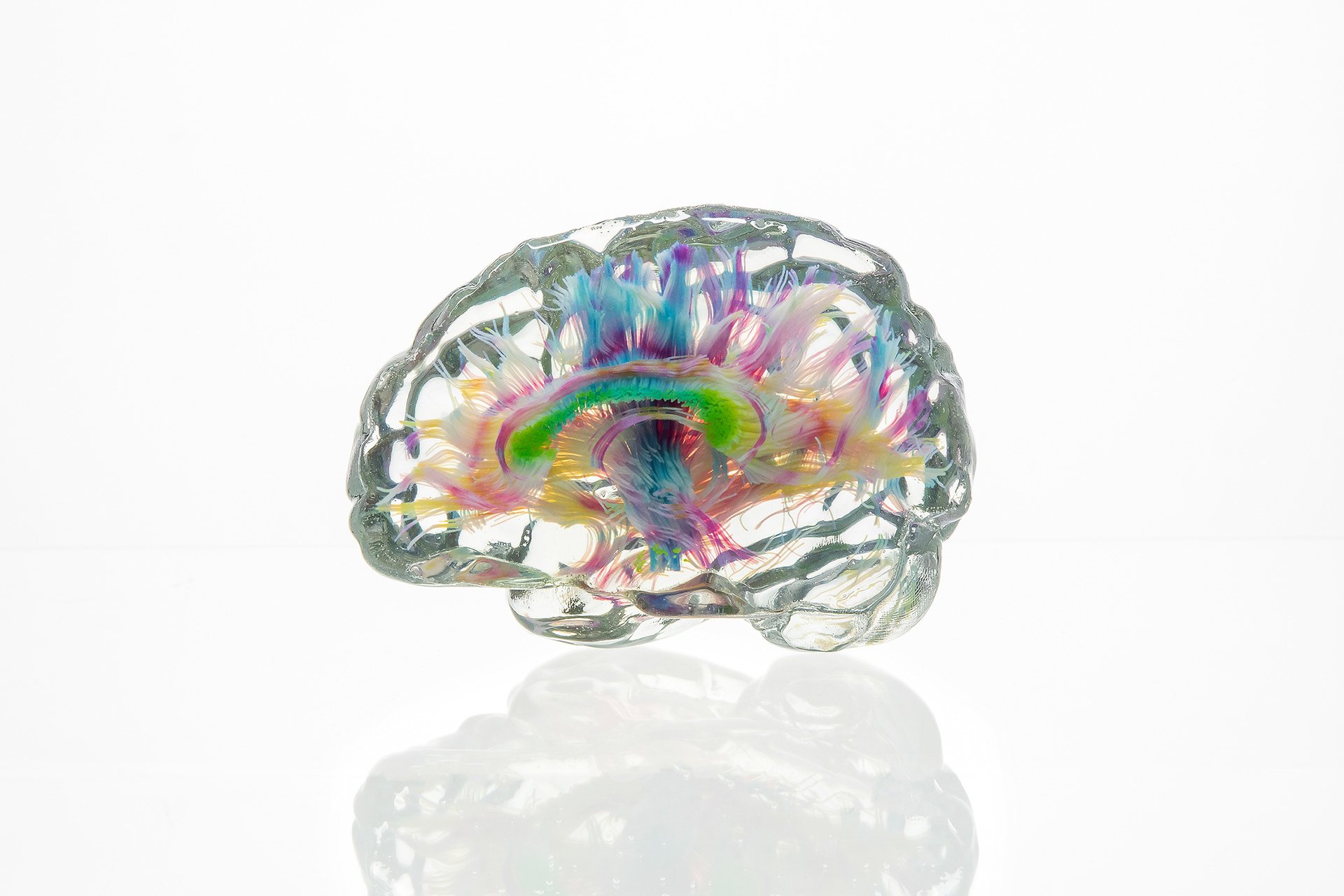
I contributed to Making Data Matter, a method for multimaterial voxel-level 3D printing that enables direct translation from volumetric data to physical objects. We used the method to create printed versions of 3D medical, biological, and archaeological datasets. This work was published in Science Advances (2018) and was covered in Forbes, Dezeen, ArchDaily, and 3DPrint.com.
I led research investigating biological melanin production. This pigment is found across domains of life, is resilient in the rock record, protects from UV and potentially ionizing radiation, and is notoriously difficult to structurally characterize.
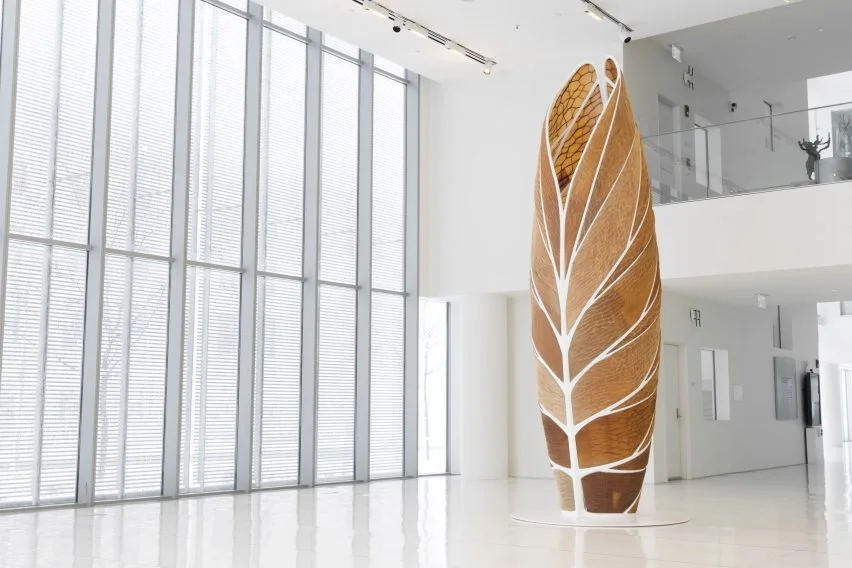
Totems, a series of computationally designed structures incorporating melanin-producing processes, explored the potential for biologically responsive architectural materials. This research resulted in a proposal for a responsive glass pavilion. Totems entered the permanent collection of the Centre Pompidou, Paris (2022), MoMA, SF MoMA, and was exhibited at the Schinkel Pavillon, Berlin ("Sun Rise Sun Set," 2021) and the XXII Milan Triennale ("Broken Nature," 2019).

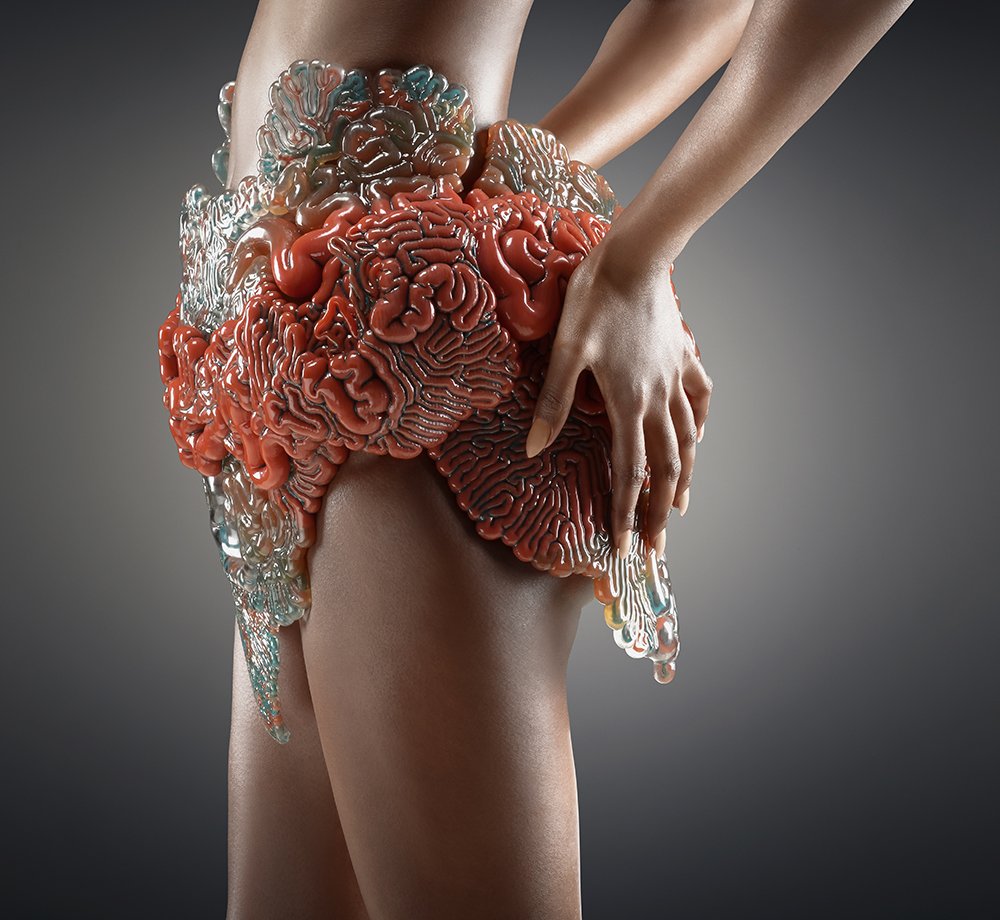
I contributed to Wanderers: An Astrobiological Exploration, a series of computationally grown wearable structures designed for interplanetary environments. One of the series, Mushtari, was a wearable piece that was filled with a co-culture of cyanobacteria and E. coli. Wanderers was exhibited at Cooper Hewitt (National Design Triennial), SFMOMA, Louisiana Museum of Modern Art, ZKM Karlsruhe, and the National Design Museum Stockholm, among others.
Much of this work required building the physical infrastructure to make it possible. At MIT, I co-designed and built a BSL-2 laboratory from scratch, selecting all equipment, negotiating with vendors, writing safety protocols, and serving as the lab manager and environmental health and safety officer. At Oxman/NEOX, I designed a second BSL-2 facility including EHS protocols, custom imaging setups, and microscopy infrastructure. I coordinated with both lab design and architectural design firms for this effort. I see laboratory design as a form of biodesign: the environment you build determines and mediates the science you can do.

I co-led research on tunable structural color using substrate-mediated colloidal assembly. This work explored how biological pigment systems and physical optics could generate color without synthetic dyes. We presented this work at Materials Research Society (multiple years) and the Living Light conference.